Head-to-Head Comparison
|
Pipe and wire
|
Starline Track Busway
|
|
|---|---|---|
|
|
|
|
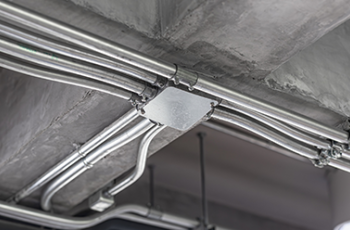
Pipe and wire installations require days or weeks of intensive labor, materials, and layout planning. |
Installation
|
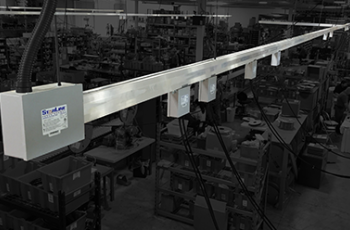
Busway’s lightweight design and multiple mounting accessories enable faster and easier installation. |
|
Modifications require electricians to tear out the existing conduit, install and pull wire through the tubing to the new outlets, and reconnect wiring back to the breakers in their respective panels. |
Flexibility
|
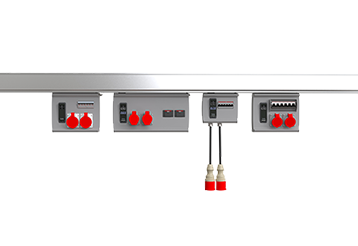
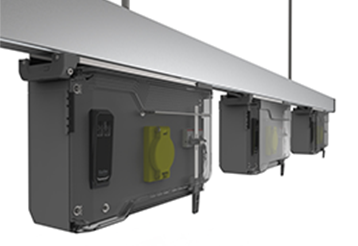
Starline busway allows the user to design their personal overhead electrical grid that can be easily reconfigured by moving plug-in units along the continuous access channel. |
|
Additions or upgrades to your equipment require extensive planning as well as hiring labor that is often disruptive and costly. |
Scalability
|
Facility managers can easily expand busway systems or install additional plugs, while reducing production downtime, complete power shut off, and planning delays. |
|
Extension cords are difficult to manage while posing tripping hazards for workers and circuit protection is located away from equipment at the panelboard. |
Safety
|
Busways are typically installed overhead, away from personnel, and deliver circuit protection at the point of use. |
|
Pipe and wire installations require numerous home runs and junction boxes positioned throughout a facility, increasing the amount of material required when more power is needed. |
Design
|
Ranging from 40-1200 amps, the busway’s open channel design enables it to be installed before equipment positioning is finalized within facilities. |
|
Traditional conduit power distribution requires labor intensive installations and costly downtime when facilities need to scale or modify their facility’s wiring. |
Cost Savings
|
Starline Track Busway’s distinctive design minimizes total cost of ownership by reducing installation time and enabling quick layout modifications. |