Built for the Pace of Change: Retail Agility Starts with Power Infrastructure
Retail Has Become a Business Built on Adaptability
Retailers have spent the last decade transforming how they operate. Stores that once existed mainly for transactions now need to adapt to omnichannel purchasing habits by supporting fulfillment, returns, curbside pickup, and digital engagement.
Click-and-collect sales services such as buy online, pick up in store (BOPIS), curbside pickup, and localized fulfillment have expanded the operational role of stores and introduced new facility requirements. By 2033, click-and-collect sales are projected to reach over 500 billion, further reinforcing the value of stores as fulfillment points for digital commerce. Yet even with the rise of digital commerce, over 80% of retail purchases still occur at brick-and-mortar locations, prompting retailers to continue investing in technology upgrades and new store experiences.
Retailers understand the need to adapt their operational strategies. The question is whether the infrastructure supporting those operations can adapt just as effectively. In this article, we explore the role power distribution plays in helping companies keep up with the pace of change in the retail landscape.
Agility Has Reached Every Part of Retail, Except Infrastructure
Over the past decade, retailers have invested heavily to achieve more operational flexibility. Supply chains have become more responsive, inventory visibility has improved, commerce platforms have enabled omnichannel experiences, and customer engagement has become increasingly personalized. Yet one area often remains significantly less flexible: electrical infrastructure. Traditional pipe-and-wire systems were designed for relatively fixed environments, making modifications time-consuming and labor intensive.
Busway systems can help facilities accommodate evolving layouts, technologies, and operational needs without treating every change as a major infrastructure project. The primary advantage of busway is the ability to add, move or reconfigure power without major electrical construction. Its open channel design makes changing power drops and lighting fixtures simple. Instead of requiring additional runs of pipe and wire, shutdowns, or hired electrical labor, busway plug-in units enable plug-and-play power access that can be reconfigured in minutes.
Flexible electrical systems like busway can help retailers adapt more quickly, reduce disruption during remodels and upgrades, scale more efficiently, and support future technologies as they emerge.
The Problem with Legacy Electrical Architecture
As customer expectations, store formats, and technologies continue to evolve, retailers are refreshing and remodeling locations more frequently than ever. Every new initiative, whether it's a technology upgrade, a reconfigured store layout, or a new fulfillment strategy, has a physical impact on the store itself.
For stores operating with pipe and wire electrical infrastructure, facility modifications typically require contractors, construction scheduling, and operational disruption. For retailers managing multiple locations, even minor electrical changes become costly and time-consuming when repeated across a complete portfolio of stores. As the industry continues to evolve, the ability to adapt physical environments becomes increasingly important to overall operational flexibility and business growth.
Supporting Continuous Store Evolution
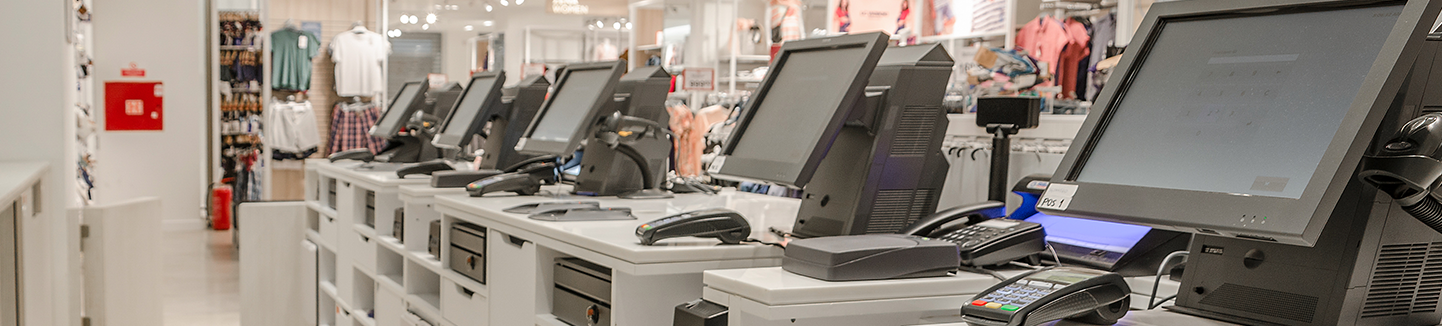
In response to changing consumer demands across the industry, companies are expanding self-checkout capabilities, deploying digital displays and signage, establishing dedicated pickup and fulfillment areas, and investing in technologies designed to improve both customer and employee experiences, such as AI, automation, and self-service solutions.
Not only do these adoptions often require store layout changes, but they also impact the existing electrical system. With busway, adding or reconfiguring equipment is a matter of quickly relocating plug-in units or connecting new loads where power is needed. For example, if a retailer needs to alter a section of the sales floor for online order pickups or add more self-checkout stations near the store entrance, power can be brought to the new location by repositioning or adding plug-in units along the busway. This flexibility helps retailers adapt their spaces as operational requirements and customer expectations change.
The pace of change isn’t slowing down. Retailers best positioned for the future may not be the ones that most accurately predict what's next. They may be the ones that can respond quickly when requirements change, whether that means deploying new technologies, supporting additional fulfillment services, or reconfiguring store layouts. Flexible power infrastructure makes that level of responsiveness possible.
Learn how Starline supports the unique requirements of various retail environments or contact our experts to talk about your next project.