From Robotics to EVs: Addressing Automotive Manufacturing Challenges with Modern Power
A Smarter Foundation for the Future of Automotive Manufacturing
The automotive manufacturing landscape is evolving at record speed. From the rise in flexible manufacturing models to the integration of automated systems and changing regulatory pressures, facilities must evolve quickly without sacrificing uptime or efficiency.
Modular busway systems offer a smarter, more agile alternative to traditional power systems. By simplifying power distribution and enabling fast, flexible changes on the production floor, busway helps manufacturers stay agile as technology, products, and requirements continue to shift.
1. Workforce Shortages
Reducing Electrical Labor Demands
Automotive manufacturers face persistent labor shortages, especially among skilled trades required for electrical work. When electrical modifications or upgrades are needed, facilities with hardwired electrical systems often require extensive labor to make the change. This process can lead to days or weeks of downtime, lost productivity, or potential scheduling delays, especially when facing staffing shortages.
Busways reduce labor requirements, minimizing disruption and shortening downtime windows when changes are needed. Because busways use plug-and-play power connections instead of fixed wiring, power drops can be added, removed, or relocated without specialized labor or extended outages. This modularity reduces dependence on limited electrical labor, speeds up production line changes, and minimizes downtime.
2. Automation Integration
Power Built to Support Robotics, IoT, and Smart Manufacturing
Modern automotive facilities increasingly rely on robotics, autonomous guided vehicles (AGVs), and IoT-connected equipment. These technologies require flexible and expandable power capacity, something rigid conduit systems struggle to support.
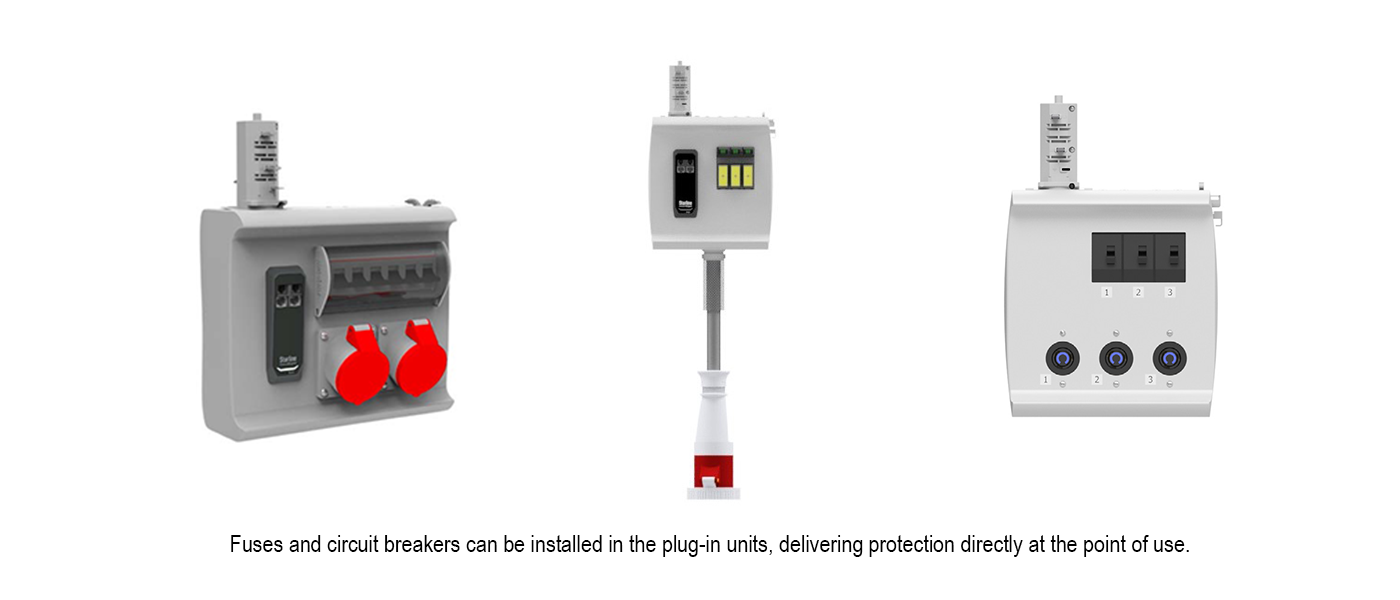
Busway enables seamless integration of automation technologies by providing scalable power capacity and simple installation of new circuits. With point-of-use power and localized circuit protection, manufacturers can bring new equipment online or perform maintenance without disrupting downstream machinery. As automotive manufacturing becomes increasingly digital and automated, busway helps ensure that power infrastructure supports growth and innovation instead of holding it back.
3. Energy Constraints
Meeting the Growing Power Demands of EV Production
The rise of EV production increases energy demand for battery assembly, testing equipment, and charging infrastructure. Often, traditional electrical systems are too rigid for these evolving layouts or costly to upgrade.
Busway’s flexible design is built for robust environments that require higher power densities and still need adaptable power access. Its modular, open-channel design allows manufacturers to add capacity where needed without rewiring, or reconfigure circuits to support product line shifts. Rated up to 1200 amps, busway can support the power demands of EV production while ensuring automakers are prepared for higher ampacity requirements in the future. This adaptability is especially valuable for EV and battery lines, where equipment requirements change frequently as technology advances.
4. Regulatory Uncertainty
Staying Agile Amid Changing Codes and Requirements
Automotive regulations, particularly around electrification, energy efficiency, safety, and emissions, continue to evolve rapidly. Complying with new standards often requires modifications, including electrical changes to support power capacity expansions, energy monitoring upgrades, or new safety regulations.
Unlike hardwired systems, busway provides modular and scalable power infrastructure that allows manufacturers to adapt as regulations evolve. Busway systems enable facilities to adjust power layouts or scale infrastructure to support new processes or equipment without extensive rewiring delays. With integrated power monitoring capabilities, the systems also provide insights into power usage down to the circuit level.
Instead of being locked into a fixed electrical design, manufacturers using busway can respond to regulatory shifts with confidence and minimal disruption.
Conclusion
Whether handling workforce shortages, supporting automation, powering EV production, or adapting to regulatory changes, busway provides a future-ready foundation that traditional electrical systems simply can’t match. Busway’s modular design delivers speed and agility to manufacturers, simplifying electrical modifications and expansions, and changing electrical infrastructure from a potential hurdle to an operational asset.
To learn more about how busway brings flexible, reliable power to automakers, visit our automotive manufacturing solutions page or contact your local Starline rep today.